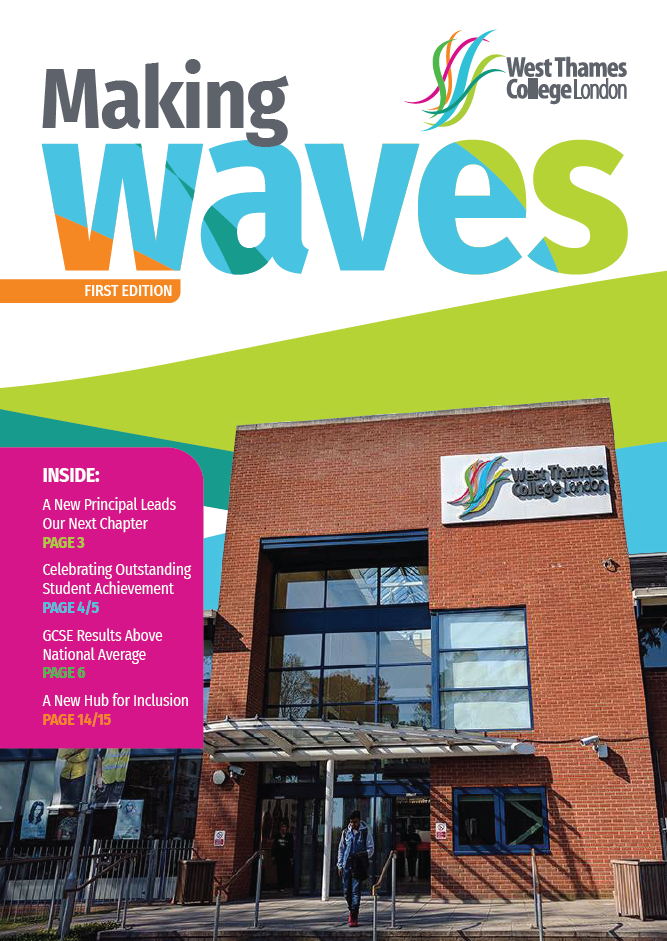

West Thames College has been featured in a government case study film highlighting effective approaches to supporting students with Special Educational Needs and Disabilities (SEND), as national reforms aim to strengthen support for young people across the education system.
The film forms part of a wider series informing discussions around improvements to SEND provision following the UK Government’s latest Schools White Paper, which outlines changes intended to make support for children and young people with SEND more consistent, inclusive and accessible for families.
Filmed at West Thames College’s Isleworth campus, the case study showcases the college’s partnership with Ambitious College, part of the national charity Ambitious about Autism. Through this co-located model, autistic learners can access specialist support while studying within a mainstream further education environment.
The approach enables students to benefit from a broader curriculum, develop social and life skills, and participate fully in college life alongside their peers.
The film also highlights the college’s specialist provision, including its Independence Hub, which supports students with additional learning needs to build confidence, develop essential life skills and progress towards greater independence, further study or employment.
Marta Gajewska, CEO and Principal at West Thames College, said:
“At West Thames College, inclusion is at the heart of everything we do. Our partnership with Ambitious College, alongside initiatives such as our Independence Hub, ensures that students with additional needs are supported to thrive, build confidence and access meaningful opportunities for their future. We are proud to contribute to national conversations on how further education can better support young people with SEND.”
The Independence Hub was developed in partnership with Hounslow Council to meet increasing demand for local post-16 provision for young people with profound and multiple learning disabilities. The hub opened in September and welcomed its first cohort of students, with plans to expand to around 40 places over the next three years.
West Thames College’s inclusive approach is embedded across the wider college community. Students with high needs take part in enterprise activities, enrichment programmes and social action projects, from running pop-up shops selling plants, cakes and handmade crafts, to raising thousands of pounds for charity through student-led initiatives.
They also participate in performances in the college theatre, sessions in dance studios, activities on sports fields and events across the campus, helping build confidence, friendships and a sense of belonging.
Students are encouraged to develop self-advocacy skills and actively contribute to decision-making within the college. Many serve as course representatives and attend executive student voice meetings with senior leaders. Others participate in focus groups with the local authority, helping shape the SEND local offer in Hounslow.
Preparing students for employment is another key priority. The college’s supported internships through Project SEARCH see around 70% of interns move into paid employment each year, with recent roles secured at Channel 4, Heathrow Airport, Thorpe Park and the London Borough of Hounslow.
Katrin Lehmann, Vice Principal of Inclusive Learning, Creative Industries and Student Experience at West Thames College, said:
“At West Thames College, inclusion is embedded in our culture, ensuring students with SEND are visible, valued and active participants in every aspect of college life. By learning, socialising and progressing alongside their peers, students build confidence, independence and a strong sense of belonging.
“This approach leads to meaningful outcomes, with many learners progressing successfully into further or higher education, supported internships, apprenticeships or sustained employment. Crucially, it also enriches the wider student community, fostering empathy, collaboration and high expectations for all.”
The government case study highlights how collaborative models between specialist and mainstream providers can help expand opportunities for young people with SEND while ensuring they remain part of a wider learning community.
Read more about the Government’s white paper here: